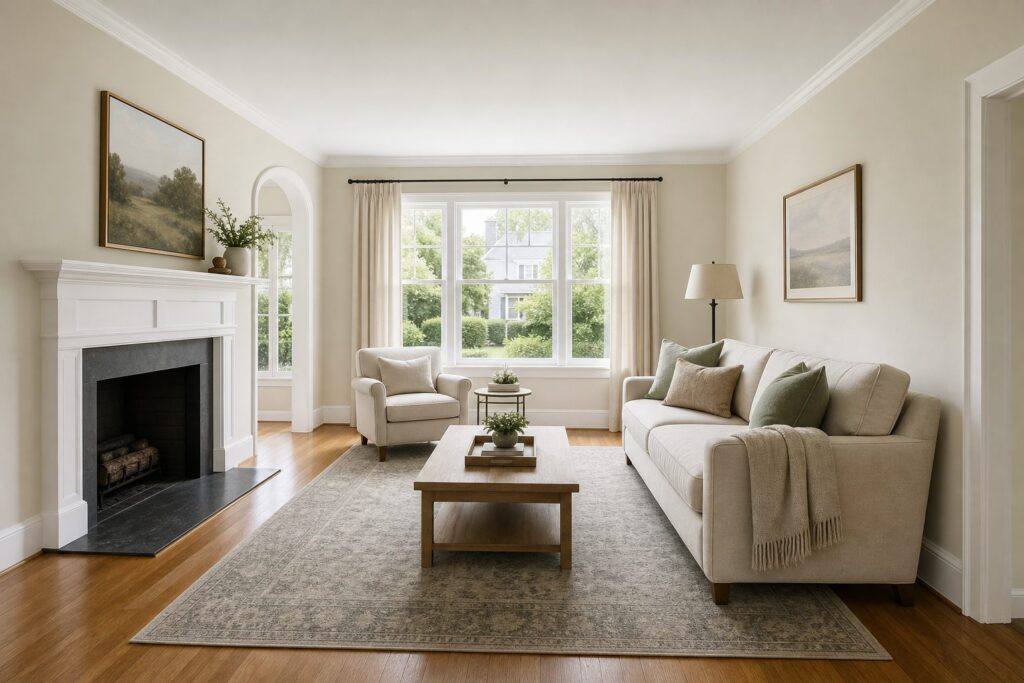
Interior Painting in Orlando, FL
Orange Avenue Painting Co offers interior painting services for homes and businesses in Orlando, FL. We focus on careful surface preparation, protecting your floors and furniture, and creating clean lines for a neat finish.
Our team communicates clearly so you understand each step of the painting process. We aim to leave your space tidy with daily clean up and precise coverage.
Painting Preparation and Finish
Interior painting involves protecting all surfaces around the work area to prevent paint splatters on floors and furniture.
Walls and ceilings usually require cleaning, sanding, and patching minor damage before painting.
Masking tape is applied to trim edges, outlets, and fixtures to preserve clean lines throughout.
The paint is applied in smooth, even coats with attention to edge and corner detail for a polished look.
Multiple coats may be applied to reach full color depth and coverage on all surfaces.
Drying conditions are monitored and the area is cleaned daily to limit dust or debris affecting the finish.
Unlike cabinet refinishing or exterior painting, interior work focuses on wall surfaces and trim inside living or workspaces.
Factors That Influence Pricing
The size of the area to be painted affects the total cost since more surface requires more paint and labor.
Surface condition also impacts cost when additional prep work like patching or sanding is needed before painting.
The type and finish of paint chosen will influence cost, as specialty paints or multiple coats require more materials.
Complex areas with many doors, windows, or trim increase labor due to the careful masking and cutting in required.
Access and protection needs, such as covering valuable furniture or delicate flooring, contribute to the overall effort.
Projects involving multiple rooms or open floor plans typically cost more than a single wall or small section.
Scheduling and Job Duration
Booking a painting job depends on the scope and size of the work requested within your space.
Scheduling availability allows planning to protect your daily routines and access to rooms during the work.
The project length varies based on surface number and condition, paint type, and number of coats applied.
Communication keeps you informed about when work will start and estimates for how long it will take.
Painting teams protect your area throughout and clean daily to maintain a safe, tidy environment.
Work proceeds in stages to allow adequate drying before applying additional coats or finishing details.
Certifications or Reviews
There are no specific credentials or certifications listed for Orange Avenue Painting Co.
Licensed reviews or client testimonials are not provided in the available information.
Common Signs of Paint Issues
These signs indicate problems with interior paint coverage, edges, or protection during or after painting.
- Uneven coverage. Areas with visible brush strokes or patchy color suggest insufficient paint application.
- Rough edges. Blotchy or jagged edges occur when masking tape is removed improperly or not used.
- Paint splatters. Drips or spots on floors and furniture mean the space was not fully protected during work.
- Peeling paint. Flaking or bubbling indicates poor surface preparation or moisture issues.
- Fading color. Uneven or dull spots show that paint did not adhere well or multiple coats were missed.
- Visible roller marks. Roller lines or streaks occur when paint is applied hastily or over-dry.
Reasons Paint Issues Occur
These causes typically affect interior painting results and the quality of the finished surface.
- Insufficient prep. Failing to clean or sand surfaces before painting leads to poor adhesion and uneven finish.
- Skipping protection. Not covering floors and furniture allows paint splatters to stain or damage these surfaces.
- Improper taping. Badly applied masking tape causes bleeding or jagged paint edges on trim and corners.
- Inadequate coats. Applying too few paint layers can produce uneven coverage and color inconsistency.
- Poor drying time. Painting in high humidity or moving air causes paint to dry incorrectly or rapidly.
- Rushed work. Speeding through cuts and edges compromises precision and the overall finish quality.
Steps Followed Onsite
Step one: Identify surfaces and protect floors, furniture, and fixtures near painting areas.
Step two: Clean, sand, and patch walls or trim needing repair for smooth finish.
Step three: Apply masking tape around trim, outlets, and edges to ensure sharp paint lines.
Step four: Use brushes and rollers to apply paint evenly across walls and ceilings.
Step five: Allow each coat to dry before applying additional layers as needed.
Step six: Remove tape carefully and inspect for touch-ups or imperfections to correct.
Step seven: Clean work area and remove all protective coverings daily until project completion.
Common Painting Mistakes
Avoid these homeowner errors that can result in damage or require repainting before professional work.
- Skipping surface prep. Not cleaning or patching walls causes paint to peel or look uneven soon after.
- Neglecting protection. Failing to cover floors or furniture leads to permanent paint stains and cleanup hassles.
- Using poor tape. Low-quality masking tape allows paint to bleed and creates messy edges on trim.
- Painting in damp rooms. Applying paint when humidity is high prevents proper drying and adhesion on walls.
- Overloading rollers. Too much paint on rollers causes drips and uneven wall texture after application.
Maintaining Painted Surfaces
Follow these simple habits to preserve your interior paint finish and extend its appearance.
- Regular dusting. Remove dust and dirt weekly with a soft cloth or vacuum brush to protect paint surfaces.
- Prompt cleaning. Clean spills or marks immediately with mild soap and water to avoid staining walls.
- Avoid harsh chemicals. Do not use abrasive cleaners or solvents that may damage paint or remove color.
- Maintain humidity. Keep interior humidity moderate to prevent paint from blistering or peeling over time.
- Repair minor damage. Address small chips or cracks early to keep the paint surface smooth and intact.
Common questions
We cover all furniture and floors with protective materials before painting begins to prevent any paint splatters or stains.
You will see careful preparation, surface protection, precise painting, and daily cleanup to keep your space tidy and safe.
The duration depends on the size and condition of your rooms, paint type, and how many coats are needed to finish.
Yes, attention is given to producing clean edges and smooth coverage, with touch-ups performed as needed before completion.
Consider the surface type, area size, and desired finish; we focus on walls and trim while other services cover cabinets or exteriors.
Ready when you are
Request a Painting Estimate
Contact us for a clear explanation of your painting options. We will schedule a visit and discuss steps to update your space.